The Gardener
When Martin Byrne came down from Dublin, the people in Glenamaddy all thought he
was a poor example of a man, and the poor fella should be left alone. That was how
they said it, even to Martin himself.
“Ah, poor lad.”
He was not poor in money. Martin had always had plenty of money and had bought the
old Burke place in Glenamaddy outright, along with a new jeep with Dublin plates and
leather seats.
Poor they meant in the other way, the more meaningful poor. The way a man is poor
when there is no woman in the passenger seat and no one to call him in for dinner.
His wife was dead, this was common knowledge. In the countryside, grief was given its
own field to grow and be harvested in. People might glance over the wall at it, but they
did not hop over and go tramping across.
The old Burke house sat a mile above the village, where the road narrowed and turned
to gravel beneath the hedges. It had whitewashed walls, a rusting galvanised lean-to,
two ancient apple trees, and a back garden gone to briar and rushes. Beyond it rose
boggy land filled with heather and fairy bushes, and beyond that the low shoulders of
the mountains, blue some mornings, grey and wet most days, and sometimes gone
entirely under the weight of Irish cloud. Martin had never lived anywhere that dark. In Dublin there was always light from
something. A streetlight, a plastic takeaway sign, neighbour’s television smearing blue
through thin curtains. Even at three in the morning the city held itself awake. Here, once
the night came down, it came fully.
The first week Martin slept badly. The second week he stopped sleeping much at all. He
would wake in the small hours with his hands clenched around nothing, his nails leaving
little crescent moons in his palms. There was a feeling in him he could not name, except
that it seemed to live in his tingling fingers.
At first he thought it was grief, for as emotions go there was none as generous as grief.
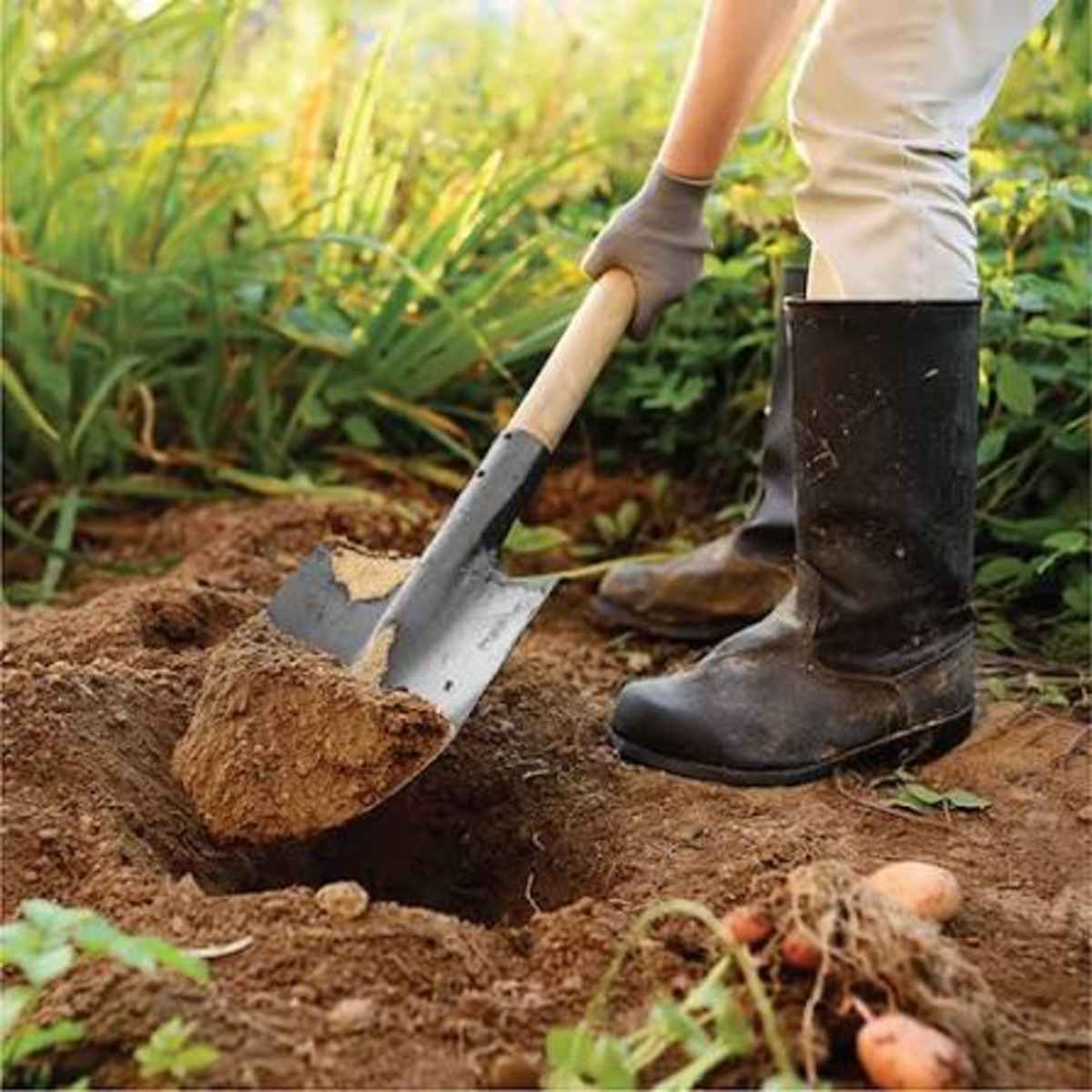
So when he went into the back garden before breakfast with a spade he had found in
the shed, he told himself he only needed work, honest work. Something to harmonise
body with mind. He had been too long in offices and apartments, too long under LED
lights with soft palms and starched shirts.
The garden was a mess, but he would clear it. Turn the soil and plant something.
He started near the back door, cutting away nettles and briars. Thorns caught his
sleeves and scratched the soft insides of his forearms. Roots twisted together against
the shovel blade. Stones appeared constantly in the earth and on the third day he broke
the handle.
Martin drove into town for another. The man in the hardware shop asked what he was
digging at.
“To plant vegetables, I hope,” Martin said. The man waited.
“Carrots, maybe. A few turnips?”
“Wrong soil for root vegetables,” the man said. “Too heavy. Mostly clay.”
Martin bought the handle anyway, along with gloves, lime, seed packets and a book
called Vegetable Growing for Dummies. The book remained on the kitchen table
unopened. The lime he put in the rusted shed and did not look at again.
By the end of April he had cleared a strip along the wall and dug two crooked beds. His
back ached. There was always mud under his nails no matter how often he scrubbed
them. He was tired now and prayed for one night where he slept through to the dawn
chorus.
But the wanting in his hands grew worse and one night he woke in the back hall naked
except for his boots. Once fully awake, he dressed and went outside. The moon was up,
thin, judgemental and mean-looking. He sank the blade halfway into the earth, then
looked back at the house and saw his own shape reflected in the glowing kitchen
window: tall, grey-faced, ridiculous.
His reflection made him laugh, a little too loudly.
“For Christ’s sake,” he said.
A fox yipped somewhere beyond the hedge. Martin went inside, washed his feet in the
bath and poured whiskey into a mug because all the glasses were still packed.
The next afternoon, old Mrs Keane from the lower road stopped and leaned on the gate. “You’ve great energy for an auld blow-in,” she said.
Martin straightened too quickly with pride and felt his spine object.
“Something to do, I suppose.”
“That’s the spirit. No time for wasting.”
She was small and hard-looking, with a scarf tied under her chin. Her eyes moved over
the opened earth.
“Burkes never grew anything there,” she said.
“No?”
“No.”
She said it in a way that made him wait for the rest, but the rest did not come.
“Bad soil?” he asked.
Mrs Keane sniffed.
“Old sacred soil, some say.”
He smiled. “Isn’t all soil old?”
She looked at him then, not unkindly.
“Some of it holds the other people.”
“Other people?” “Ah ya. The Fairies. But you Jackeens wouldn’t care.”
“No, I suppose we don’t buy into all that stuff.”
“Well, I’ve to put on a lock of spuds.”
With that she turned and walked away. That night he dreamed of Evelyn. Not as she
had been towards the end, standing in the kitchen with her arms folded, watching him
with that flat look that made him feel like an insect under glass. In the dream she was as
she had been early in their marriage, laughing in bed on a Sunday morning with the quilt
around her shoulders, hair all over the pillow, eyes sapphire blue in the light. Then she
was under soil. Only the eyes remained open. When he woke, his hands were already
moving.
He dug as sunrise came with rain off the mountains. He widened the bed along the back
wall and drove the spade into clay so dense it came up in shining slabs. At around
seven, the blade struck something hard. The shock ran up his arms. It was not the flat
clink of stone. This was sharper, deeper, almost musical. He scraped with the spade,
then dropped to his knees and used his hands.
A smooth blue surface appeared through the clay. For a moment he thought it was
glass. Then old porcelain, maybe, or some piece of pottery. The colour was startling
against the mud: dark blue, but bright inside itself, veined faintly with silver.
He wiped it with his thumb.
Light seemed to move through it. Martin sat back on his heels. His heart was beating harder now, not with fear but with a
sudden clean excitement he had not felt in years.
A jewel.
The word came to him whole and childish. A jewel in the garden. He laughed softly. It
seemed absurd, wonderful, like the world after all its cruelty and messiness had put a
hand through the clay and offered him an apology.
He fetched a trowel and worked around it carefully. The blue surface was bigger than
his palm. Then bigger than both hands. It curved away into the earth, a great oval of
blue.
He leaned closer.
Something moved in its depths.
Martin froze.
A black slit opened from top to bottom.
The jewel blinked.
He fell backwards into the mud and made no sound. Rain hammered the shed roof. The
blue thing stared up at him from the earth.
An eye?
Impossible. He backed away, left the trowel where it lay and went inside. Martin locked the back
door and stood in the kitchen until his breathing slowed. Lack of sleep, he thought.
Exhaustion.
By evening he was digging again. He told himself he had to know. No man could be
expected to leave such a thing in his garden. It might be dangerous. It might be
valuable. It might require reporting, though to whom he could not say.
The council? The guards? Some man in a fleece who would arrive with a clipboard and
take everything?
No.
Not yet.
He dug around the eye until the mud gave way to something harder.
A scale.
He knew it before he admitted he knew it. Each scale was the size of a dinner plate.
When he washed one with the hose it showed oil-slick green and black, then bronze,
with dull red at the edges like metal held in fire. He touched it with one gloved hand.
Warm. The day was cold enough for his breath to show. He should have run then. A wise man
would have gone to the police or the priest or anyone at all and said there was
something under the garden that did not belong to nature as they understood it. Martin simply dug. The need in his hands had become bigger than fear. He dug until the
pads of his fingers split and he vomited into the nettles from exhaustion, wiped his
mouth with the back of his hand and kept going.
He found a ridge of spines, each one curved and black as a thorn from some enormous
briar. A folded claw beneath the apple tree, long as a scythe blade. More scales,
hundreds of them, running beneath the briars and under the wall.
This thing was alive.
At night he heard it breathe. A low pull under the soil, a pause, then a warm release.
The first time he heard it, Martin was at the kitchen sink washing mud from a cut on his
thumb amd drinking coffee. He looked up and saw his own reflection in the black
window. Behind him, Evelyn stood by the table. He turned so quickly the mug went from
the counter and shattered. There was no one there. Only the unopened seed packets
and Vegetable Growing for Dummies.
In the morning he found soil on the stairs. Not tracked in clumps, as from boots but
sprinkled. A thin line leading from the back door to the bedroom he no longer used. He
swept it up. After that the memories came without permission.
Evelyn in the old house in Rathmines, standing in the back garden in her dressing
gown, smoking though she had promised to stop. Morning light on the red brick wall. A
neighbour’s child crying somewhere.
“I know, Martin.” He had looked at her across the wet patio.
“You know what, love?”
“Don’t play innocent.”
He remembered the shovel leaning against the shed because he had meant to plant an
ornamental cherry tree. He remembered her saying the other woman’s name, then him
denying it. He could still see the disdain in her face when he denied it. She had finally
seen the full measure of him and found there was very little to count.
Martin did not remember deciding to pick up the shovel. He remembered the bell sound
as it thudded off her head.
Afterwards, he dug until his shirt stuck to him and his hands blistered. It had rained that
day too. He wrapped her in an old dust sheet from the hallway. He remembered pouring
lime over her body, the white powder touching her face where the sheet had slipped,
how it bubbled at her eyes.
After that came months of ordinary horror. Police. Friends. Her damn nosey sister. He
made missing posters and dozens of phone calls.
Have you heard from her?
When did you last see her?
Had she seemed upset?
Was there anyone else? Martin played the grieving husband well enough because grief and fear used many of
the same muscles. He lost weight and did not shave on purpose. Once, he wept
theatrically in front of a young guard and was proud of it afterwards, then ashamed of
the pride, then proud again because shame looked convincing.
No body was found.
The old house was sold. *** Mrs Keane came to the gate once and called his name. He crouched behind the shed
until she went away. That evening she left a brown loaf on the wall, wrapped in a tea
towel. He ate half of it standing in the garden with clay on his hands and lips.
The creature’s head emerged slowly.
The skull was longer than a horse, wider than the kitchen table. Two great horns swept
back into the earth, ridged and dark, one broken near the tip. Mud clung to the nostrils.
Moss had grown along the jaw. Roots threaded through the teeth and down into the
throat.
The blue eye remained open.
He told himself he was freeing her.
The curve of the jaw beneath the scales began to resemble Evelyn’s cheek when she
turned away from him in bed. The folded wing beneath the far wall had the shape of her
shoulder under a sheet. The long black claws, when cleaned of clay, were like the hairpins she left in little dishes around the old house, sharp things appearing where he
did not expect them.
“I didn’t mean for it to go like that,” he said, scraping clay from the second eye. “You
know that.”
The garden gave a low sound, a settling of breath.
“I was frightened.”
The eyelid twitched.
“You were going to ruin me.”
He sat back, panting. His chest hurt and around him the garden steamed in the cooling
air as crows lined the back wall, shoulder to shoulder, black beads of patience.
“She meant nothing,” he said.
The first eye watched him.
“That was the truth of it. Nothing.”
The mud over the second eye cracked. He leaned closer. Another strip of blue
appeared.
“You were my everything, once,” he whispered.
The second eye opened.Martin cried out, but not from fear. Both eyes were Evelyn’s.
The dragon breathed and the whole garden moved. Soil slumped from its ribs. The apple trees shook though there was no wind. A line of scales lifted along its back, each
grinding against the next with the sound of stones dragged over concrete. Heat rolled
from the opened earth and struck Martin in the face.
He staggered back.
“No,” he said.
One wing stirred beneath the wall and brought half of it down. Stones tumbled into the
hole. The crows rose all at once, silent except for the rough beating of wings. Martin
turned toward the house, but his boots slipped in the mud. He fell, crawled, got one
hand around the spade and pulled it to him like a sword.
The dragon lowered its head.
Mud and roots hung from its jaw. Its nostrils flared. In the blue eyes there was no rage.
Only disdain. He raised the spade.
“I’m sorry,” he said.
The dragon blinked. For one clean second he thought that might be enough. That the
old stories were true in the soft way people liked them to be true. That confession broke
the curse. That sorry was the key. That a man could speak two small words at the end
and all the earth would loosen around what he had buried.
Then the dragon opened its mouth. Inside was heat and old dark and the smell of lime. Martin saw, among the teeth and
steam, Evelyn’s eyes bubbling softly. He saw himself as she must have seen him. Not a
monster. Just a frightened, selfish man with a shovel. Then the jaws came down.
In the morning, when Mrs Keane climbed the hill with a second loaf and a jar of
blackberry jam because grief was grief no matter how strange a man got with it, she
found the back garden turned over from wall to wall. There were deep marks in the clay,
like furrows made by some enormous plough. The apple trees were gone. The shed
was flattened. Steam rose from the opened earth, though the morning was cold.
Of Martin Byrne there was nothing but one boot near the back step.
Mrs Keane stood there a long time.
Then she crossed herself, not quickly, and not because she was surprised.
Below her, the village began its ordinary morning. Kettles boiled, radios muttered and
an old tractor spluttered into life. The mountains kept their heads under cloud.
In the ruined garden, something blue shone once beneath the soil, then closed.