Every story I write begins as a poem.
I'm not sure when I started doing this, but somewhere along the way it became part of how I write. Before I worry about characters, plot, dialogue or even where the story takes place, I write a poem.
It's my way of finding out what the story is really about. Not what happens in it, but what lies underneath: the theme, the feeling, the thing that makes me want to tell it at all. I suppose I'm trying to find the story's soul before I give it a body.
Take "A Small Ministry of Presence." It started with a fox. A small, ginger, hopeless young fox who began turning up in my garden at night, and who I ended up ordering a pizza for. I thought that was the story: a funny one about a man, a fox and a confused lad on the phone at Domino's.
Then I wrote the poem, and the poem told me otherwise. It wasn't about the fox at all. It was about fear. I was waiting on an operation to remove a kidney, and the word cancer was sitting in every room of the house. I couldn't say I was afraid. But I could talk to a fox, and tell him he was doing well.
The poem doesn't have to be good. Nobody else ever needs to read it. It just has to tell me something I didn't understand when I sat down. (That one did end up in The Soliloquist, but that was a bonus.)
The bones
Once I've found that, I write a short story. And I mean short. As short as I can make it while still having a beginning, a middle and an end. I strip away anything that doesn't need to be there. I want to know what happens, who it happens to and why it matters.
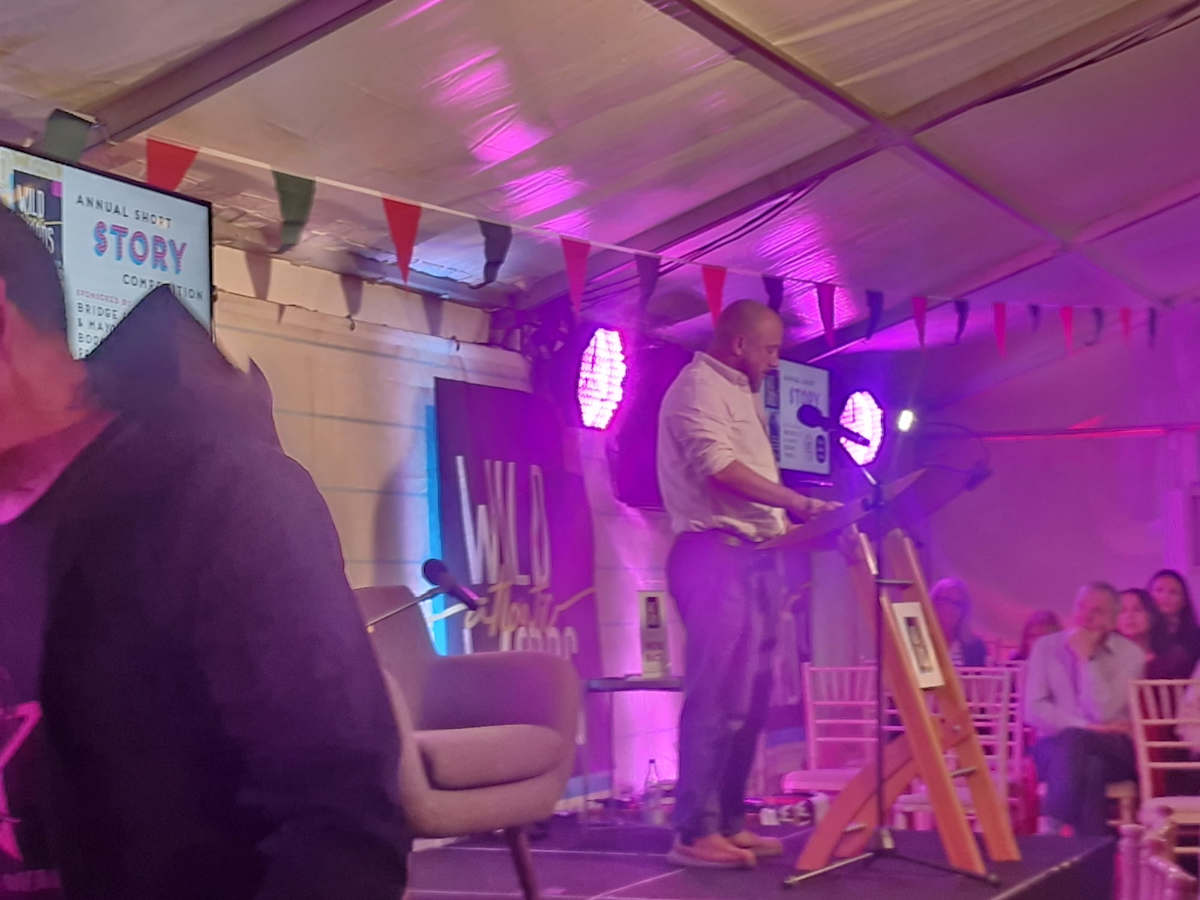
For the fox, that was 500 words, written for Wild Atlantic Words. A man feeds a fox. He tells the fox the things he can't tell himself. His wife puts a hand on his shoulder and clicks the kettle on. That was all it needed.
If the poem gives me the soul, the short story gives me the bones.
The breath
Then, finally, I write the full story.
This is the part I enjoy most. I stop keeping everything small. I let the story open its lungs and stretch its legs. I let the characters talk a little longer, take the wrong road, or wander somewhere I hadn't planned.
The fox story grew to 1,200 words and was published in Ragaire. In that version, the stolen porch doors from a ghost estate in Leitrim wandered in. So did the Mass Rock, and the fox's possible crimes, like forgetting his homework or yipping back at his mother. None of that was in the poem or the short version. But because I knew what the story was really about, I could let it wander and still find my way back to the kettle.
Sometimes a story doesn't go very far. Sometimes it wanders so far that I barely recognise it. And that's fine.
I have the poem to remind me why I wanted to tell it, and the short version to remind me where I thought I was going. Neither is a set of instructions. They're just something to return to when I get lost.
Smaller before bigger
I'm not suggesting this is how everyone should write. There are probably as many ways of writing a story as there are people willing to sit down and try.
But if you're struggling with a story, try making it smaller before you make it bigger.
Write the poem. Find out what hurts, what matters, what makes you feel something.
Then tell the story in as few words as you can.
And when you finally have something worth telling, give it all the room it needs to wander.
October 11, 2026
Every Story Begins as a Poem By J.M. Lane