Some of the Monsters Live Up the Road
Irish Folklore Survived Because We Kept Changing It
J.M. Lane
I bastardised Irish mythology. Lovingly.
In the Raven Chronicles, my fantasy trilogy, I took Setanta, the childhood name of Cú Chulainn, and gave it to a fictional son of Cú Chulainn and the Morrígan. I moved stories around, mixed folklore from different places and periods and invented things completely. It was either a continuation of the tradition or an act of cultural vandalism. For a while, I was not sure which. Then I wrote a crime novel and found out the fantasy had been the easy part.
There is a temptation with anything old to treat it like an artefact. Don't touch it. Don't damage it. Certainly don't let some fella from Clare put it into a novel. But Irish stories were never sealed behind glass. They passed from teller to teller. Names changed. Hills moved. A creature at the bottom of a lake in Clare might turn up in Donegal with a worse temper. The story lived because somebody thought it worth telling again, and no two people tell anything exactly the same way.
I have been thinking about that lately because something is happening in Ireland. I am wary of calling it another great revival. Historians usually decide these things afterwards, when everyone involved is dead and neat dates can be put around it. Still, you can hear it in the music and see it in the books. It is there in the renewed interest in Gaeilge, folklore, pilgrim roads, field names, old skills, and why somebody's grandmother would never cut down a particular tree.
It is not a misty-eyed attempt to recreate an Ireland where we all sat around turf fires speaking perfect Irish and waiting for the banshee. Nobody really wants that Ireland back, if it ever existed. Instead, people are looking back and asking whether we left anything useful behind.
Manchán Magan understood that better than most. He could tell you something you had never known about your own country without making you feel stupid for not knowing it. That mattered. Many of us left school with a complicated relationship with Irish. Gaeilge meant grammar, textbooks and the fear that the teacher might ask a question we could not understand. Manchán seemed to say: forget that for a minute. Look at what is here.
He kept showing us that the old Ireland had never gone anywhere. It was hiding in the language and the land. He wrote a book called Thirty-Two Words for Field. Thirty-two. Only in Ireland would one word not be enough for a field. Every one of those words carried something with it: how the ground was worked, what happened there, what people believed about it. Listening to him, I started to think the tree your grandmother would not cut was not superstition at all. It was a memory that had forgotten why.
He died in October 2025, but somehow he is not quite finished talking to us. A posthumous spoken-word album, Slí na Samhlaíochta (The Way of Imagination), carries his voice back through mythology, Gaeilge, Tír na nÓg and the Otherworld. A man who spent so much time reminding us that old voices never really disappear has left his own behind.
That same instinct is turning up elsewhere. Through Wild Irish, Diarmuid Lyng and Siobhán de Paor set Gaeilge alongside storytelling, poetry, hurling, foraging and old skills. It is not heritage behind glass. They take something inherited and ask what use it might have now.
Any trad musician could have told me that. Rónán Ó Snodaigh has spent decades proving it, first with Kíla and now with Myles O'Reilly. Their new album, Mise Tusa, came out in May. I had Rónán's music on while writing my first book, and it taught me more about what I was allowed to do with the old stories than any textbook. A tune travels. One musician learns it from another. He adds something. She drops something. The rhythm changes. A Clare version does not sound exactly like a Donegal version, because Clare and Donegal are not the same place. The music carries the people who played it. Why should the stories be any different?
Of course, change is not the only reason the stories survived. Scribes wrote them down. Collectors recorded them. Scholars spent lifetimes protecting and translating them. Without that work, I would have had very little to bastardise. But preservation and retelling are not enemies. There have always been versions.
That does not mean anything goes. You can lift an Irish name or monster and drop it into a generic fantasy world, but something important will be lost. For me, the Irishness was in the land, the humour, the way the dead never seem very far away, and the way the Otherworld can begin on an ordinary road. It was also in refusing to make the old beings tidy. The Morrígan is not a superhero. A púca is not a mascot.
When I say these stories are ours, I do not say it carelessly. "Ours" is not a purity test, and it does not give anyone permission to use the material without understanding it. There is still a responsibility. Before you pull a story apart, you should know where it came from and what you are changing.
There is a darker side to that, though, and it is where my new novel lives. If the old beliefs are memories that forgot why, some of what they remember would turn your stomach.
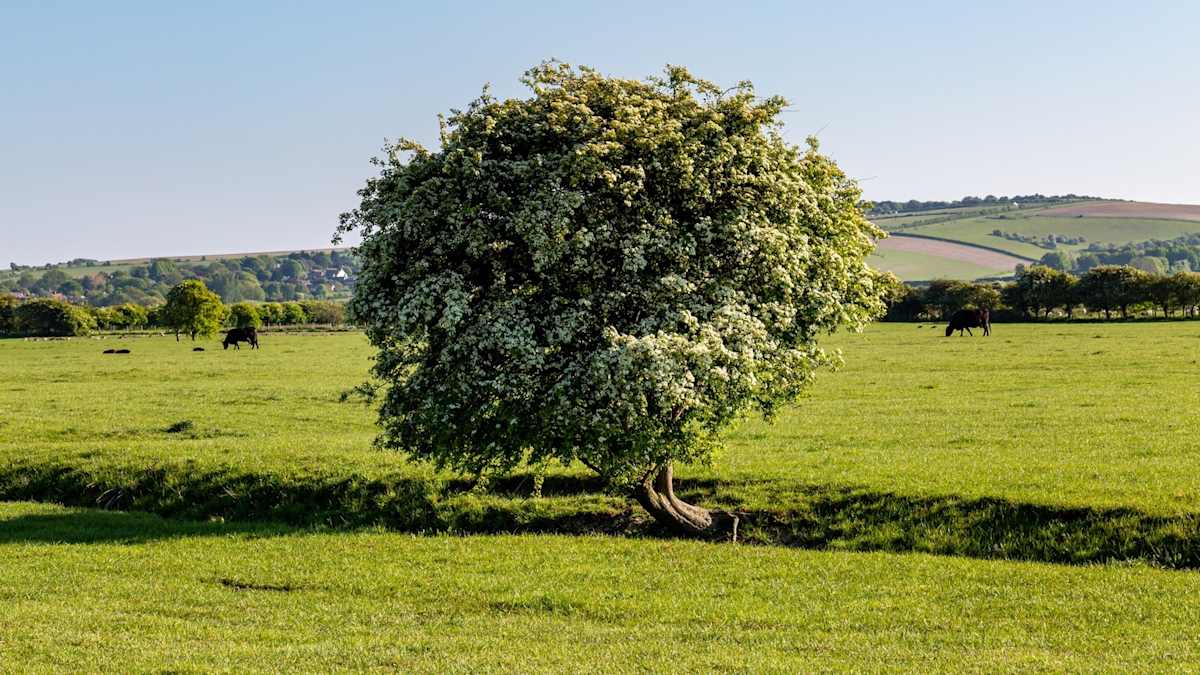
Why the Curlew Cries is a crime novel set in the Ox Mountains, where women have been going missing for decades and nobody seems in much of a hurry to find out why. There are no monsters in it. Not the kind with horns, anyway. There is a family who believe in the Other People. They will not cut a lone hawthorn or cross a fairy path. They pour the first drop of poitín on the ground for whoever is listening beyond the hedge. And they decide that a woman who does not fit is not a woman at all. She is a changeling.
None of it came from nowhere. Two real stories have been following me around for years. One is Bridget Cleary, killed by her husband in Tipperary in 1895, who swore the woman he burned was a fairy changeling and not his wife. The other is the Vanishing Triangle, the women who disappeared across Leinster in the 1990s, whose families are still waiting.
I did not want to write about either. Those were real people, and their stories are not mine to take. So I did what I had done with Setanta. I moved the hills. I took none of the facts, none of the places and none of the people. What I kept was the horror.
It is the horror of a belief that becomes a reason to hurt someone, usually a woman or a child, usually by a man who has convinced himself he is doing right. It is the horror of that belief being handed down from father to son like a farm, the son wrecked by it long before he wrecks anyone else. And it is the horror of the people meant to stop it. In the book, posters of missing women fade on a station noticeboard, passed daily by men trained to notice things. The guard who asks too many questions does not get sacked. He gets moved sideways until he stops being a problem.
Everything I learned from bastardising myths held for this book too. Know where the story came from. Know what you are changing. And when the story belongs to real people, know when to keep your hands off it.
You cannot be faithful to the old stories and make them safe. The curlew's cry has been heard as a warning in Ireland for a long time. In my book, it carries over a bog that keeps more than it should. I was no more going to tidy that up than I was going to make the Morrígan nice. The book is out on 31 October. Samhain, the night the dead come closest. I'll take it.
I know a bit about the dead coming close. In July 2024, I had a radical nephrectomy for kidney and bladder cancer. This year, I was back in theatre again.
If I am honest, the guilt about bastardising the old stories did not go because I won an argument. It went somewhere between those two operating tables. Being that close to death gives you a new outlook. I love more freely now. I have also run out of patience for small-minded judgement, the kind that comes from somebody else's fear and gets dressed up as standards. Fair, honest criticism I will take all day. Tell me the book does not work and why, and I will buy you a pint. Tell me I am not allowed to write it, and I will tell you where to go.
I still do not know whether historians will call what is happening a revival. I do know where I sit in it, and who I am sitting with. Manchán found Ireland in its words and its fields, and when his own time came, he went on national radio from a hospital bed and talked about his cancer without a shred of self-pity. Diarmuid stepped away from the Wexford senior hurling panel in his prime, away from everything rural Ireland expected of him, and became his own man. He says it was not brave. I would disagree. Rónán has spent decades making it sing, changing and growing and sticking to his guns without once watering himself down to suit anyone. None of them waited for permission.
I decided to make it fight monsters. Some of them have horns. Some of them live up the road.
By the time these stories reached me, they already carried hundreds of fingerprints. I simply added mine. I hope that somewhere down the road, somebody else will add theirs.