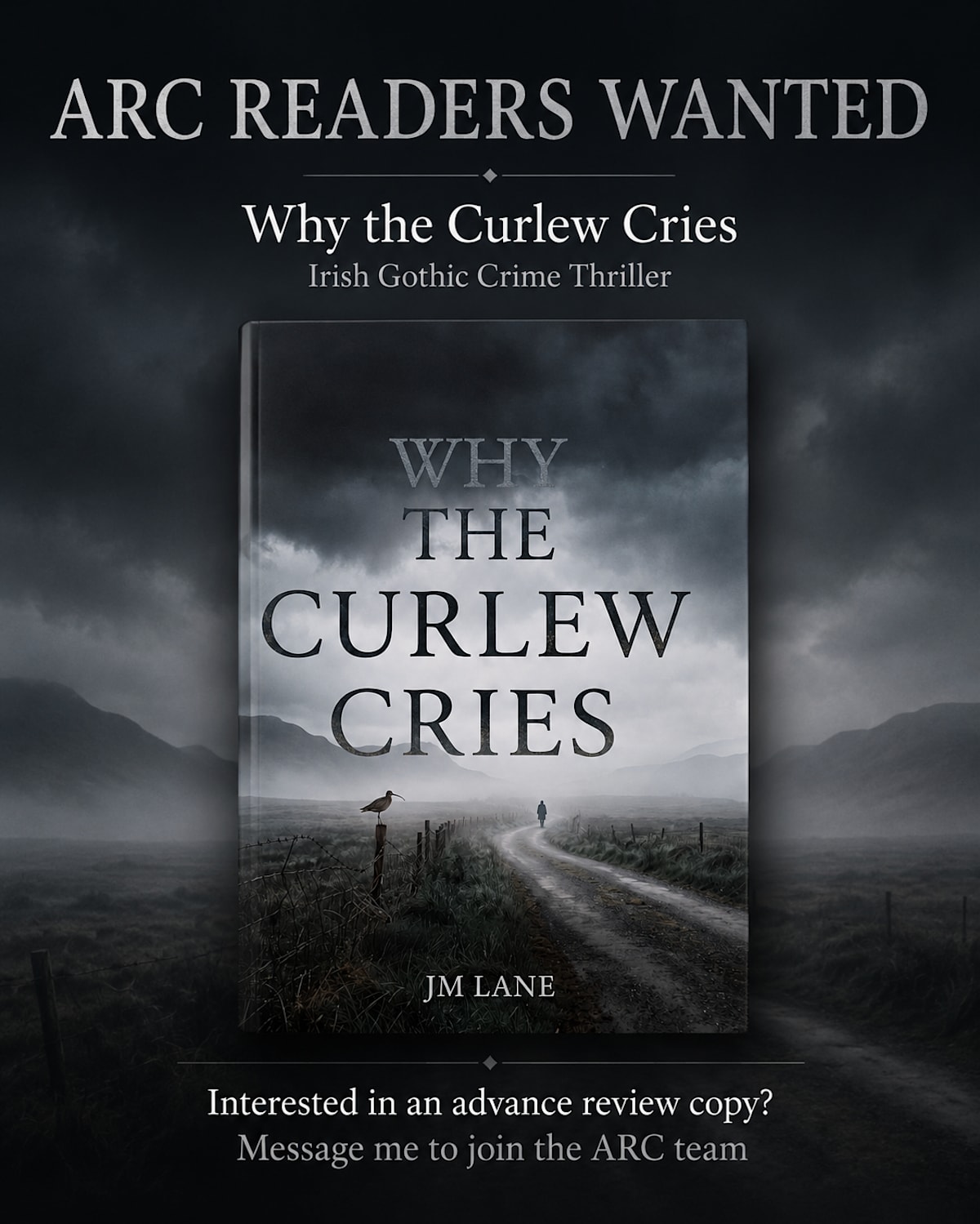
I am currently putting the final polish on my first full-length novel, Why the Curlew Cries, and I have discovered that finishing a book can be almost as difficult as beginning one.
These final days are strange.
The story is written. The characters have lived through everything I asked of them. The secrets have been uncovered, the wounds have been opened, and the final page is waiting. Yet the manuscript still refuses to feel entirely finished.
There is always another sentence that catches at me.
A word that does not sit properly. A conversation that moves half a step too quickly. A description I once loved but now suspect is slowing the story down. I cut a line, restore it, cut it again, and then spend far too long wondering whether I have improved the book or damaged it.
By this stage, I have read the manuscript so many times that the words sometimes lose their meaning. Familiar sentences become strange beneath my eyes. I can no longer tell whether a paragraph is powerful or whether I have simply grown accustomed to it.
That is one of the hardest parts of the final polish: learning to trust yourself when your confidence is at its lowest.
There is stress in these final days, certainly, but there is sadness too.
For years, this story has belonged only to me. Its characters have lived quietly inside my head. I have carried them while driving through the countryside, walking the dog and lying awake at night. They have followed me into hospital rooms, difficult days and moments when writing felt like the only way I could make sense of the world.
Soon, the book will no longer be mine alone.
Other people will enter it. They will form their own opinions of the characters. They will notice things I never intended and perhaps miss things I believed were obvious. They may love the story, dislike it or simply close the cover and move on.
A writer must eventually accept that the book will leave them.
That knowledge makes the final polish feel a little like preparing someone you love for a journey you cannot take with them. You straighten their collar, check their bag one last time and wonder whether you have given them everything they might need.
All of this is happening during a spell of hot, humid weather here in the Ox Mountains in the northwest of Ireland.
The air feels heavy enough to carry. Heat gathers inside the house, and every window I open seems to invite in more warmth rather than relief. Concentration becomes difficult. My hands rest above the keyboard while my mind drifts towards cold drinks, open doors and the faint hope of rain.
It is strangely appropriate that I should be completing the novel here, because the Ox Mountains are also the setting for Why the Curlew Cries.
This is a landscape of long roads, dark forestry and hills that appear gentle from a distance but become wilder the deeper you travel into them. There are fields divided by old stone walls, stretches of bog and rushes trembling in the wind. Houses sit apart from one another, their lights sometimes the only sign of life for miles.
On clear days, the beauty can stop you.
The mountains stretch beneath an enormous sky. Clouds cast shadows across the slopes. Water flashes between the trees. The land seems peaceful, ancient and almost untouched.
But isolation has another face.
A beautiful landscape can hide terrible things. A quiet road may be quiet because nobody is there to hear you. A distant farmhouse can contain an entire world of grief, cruelty or madness while the people living a few miles away remain completely unaware.
We like to believe that we understand the places around us. We pass the same gates, houses and fields each day and imagine that familiarity gives us knowledge. But we never truly know what is happening behind another person’s door.
We do not know what has been buried beneath a field.
We do not know why somebody has stopped appearing in the village.
We do not know what stories are being whispered in an isolated house while the mountains remain silent around it.
That uncertainty became part of the heart of Why the Curlew Cries. The novel is shaped by the idea that darkness does not always arrive in an obviously frightening place. Sometimes it grows quietly in beautiful surroundings, hidden by distance, politeness and the comforting belief that nothing truly terrible could happen here.
The Ox Mountains gave me the landscape, but they also gave me the silence.
Now, as I sit here in the heat and return to the manuscript once more, I am trying to decide when enough is finally enough.
There will always be another word I could change. Another sentence I could tighten. Another reason to delay letting the book go.
Perhaps a manuscript is never truly finished.
Perhaps there simply comes a moment when the writer must stop polishing, step away and trust that the story can now stand on its own.
I am not quite there yet.
But I am close.
July 12, 2026
The last polish